When materials become machines and algorithms become architects, the role of the designer shifts from shaping form to choreographing behavior.
Summary
As artificial intelligence begins to dominate the generation of static images and forms, the human designer faces an existential pivot. This essay argues that the future of design lies not in the static, but in the dynamic—specifically in the realm of "morphing matter" and active materials. By synthesizing principles from biology, engineering, and computation, designers are moving beyond mere aesthetics to solve complex ecological and logistical problems. From flat-packed pasta that curls when boiled to wooden seeds that drill themselves into the soil, we explore how the convergence of bits and atoms is redefining the discipline. The essay outlines a new framework where designers act as conductors of interdisciplinary orchestras, using data as a raw material and AI as a co-pilot to navigate the immense complexity of designing for a living, breathing world.
Key Takeaways; TLDR;
- The Shift to Behavior: Design is moving from creating static objects to programming material behaviors that respond to environmental stimuli.
- Eco-Centric Innovation: Morphing matter offers tangible sustainability solutions, such as reducing packaging waste by 60% through flat-pack designs that self-assemble.
- Biomimicry 2.0: Beyond copying nature's forms, designers are now replicating its mechanisms, such as the hygroscopic drilling of Erodium seeds for reforestation.
- AI as Co-Pilot: In complex systems like soft robotics, AI is essential for optimizing actuation sequences that are too intricate for human intuition.
- The Digital-Physical Loop: Successful modern design requires a seamless "digital twin" workflow, where simulation predicts physical transformation before fabrication.
- Data as Material: Information from user studies, fabrication logs, and environmental sensors is becoming a primary medium for the design process.
The Existential Crisis of the Static Designer
For decades, the industrial designer’s toolkit was defined by the static: the sketch, the CAD model, the prototype. The goal was to freeze a form in time, manufacture it, and ship it. But today, generative AI can produce thousands of aesthetic variations in seconds, challenging the traditional value proposition of the human designer. If a machine can hallucinate a chair or a dress faster than a human can sharpen a pencil, what is left for us?
The answer lies in a shift from designing forms to designing behaviors. The frontier of design is no longer about how an object looks on a shelf, but how it acts in the world. This is the era of "morphing matter"—materials that sense, react, and transform. In this new paradigm, the designer does not dictate a final shape but orchestrates a performance, programming materials to respond to heat, moisture, or light. This shift is not merely an artistic evolution; it is a functional necessity for a planet groaning under the weight of waste and inefficiency.
The Eco-Centric Imperative: When Food Becomes Logistics
Consider the humble pasta noodle. It is a staple of global cuisine, yet it represents a massive logistical inefficiency. A box of macaroni is approximately 60% air. We ship this air across oceans and continents, burning fossil fuels to transport empty space encased in plastic.
This is where the concept of morphing matter intersects with environmental responsibility. By applying principles of material science to food, researchers have developed flat-pack pasta that transforms into 3D shapes when boiled. The mechanism is elegant in its simplicity: grooves stamped into semolina dough create differences in surface area. When submerged in boiling water, the grooved side swells at a different rate than the smooth side, forcing the flat sheet to curl into a saddle, a helix, or a tube 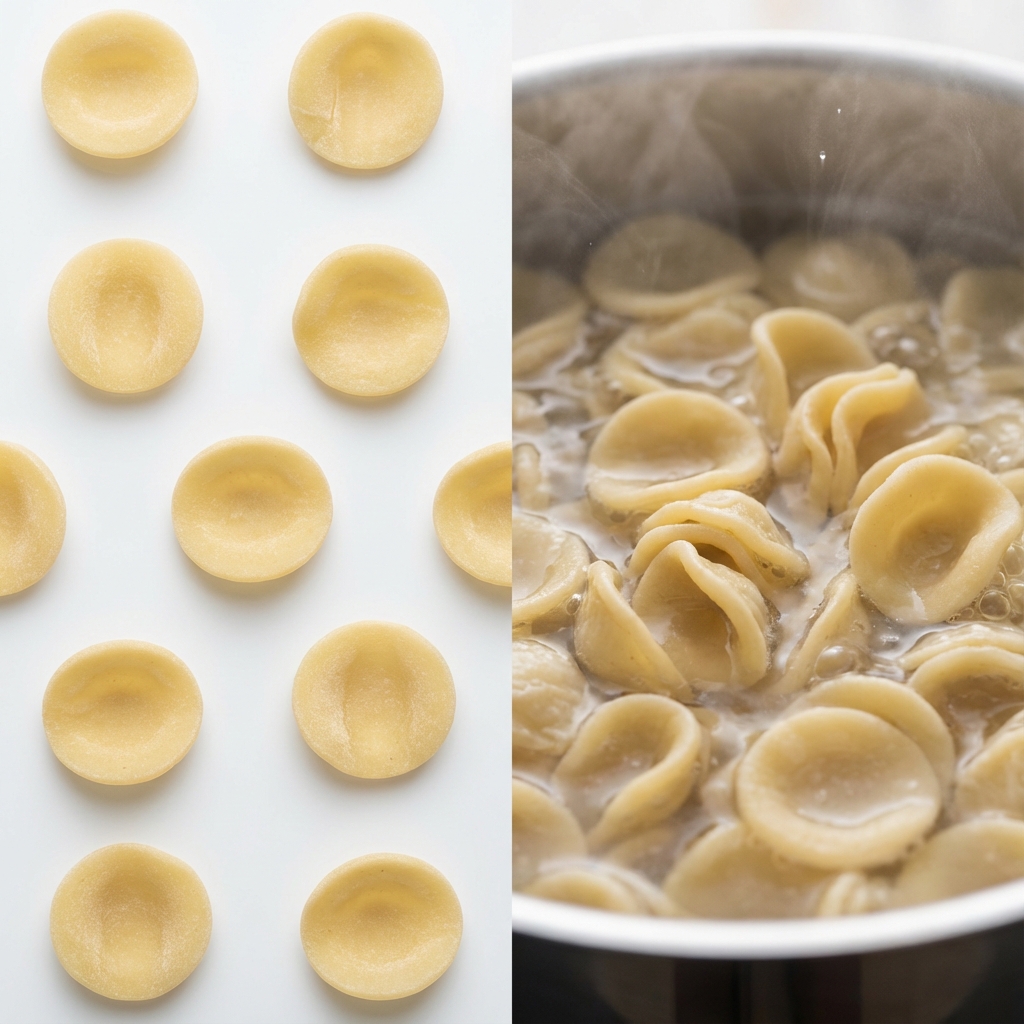
By stamping micro-grooves into semolina dough, designers can program flat pasta to self-assemble into 3D shapes during cooking, saving 60% of packaging space..
This is not a culinary gimmick; it is a supply chain revolution. Flat-packing food could reduce packaging space by up to 60%, significantly lowering the carbon footprint of transportation and reducing plastic waste. It exemplifies a new design ethos: eco-centricity. The designer’s client is no longer just the human consumer but the planet itself. By aligning human delight (the texture of a fusilli) with ecological necessity (shipping density), design becomes a tool for systemic efficiency.
Biomimicry and the "X across X" Framework
To achieve these feats, designers must adopt a mindset that transcends disciplines and scales—a framework we might call "X across X." This means working across biology, engineering, and art, and toggling between the micro-scale of material composition and the macro-scale of global deployment.
Nature remains the ultimate teacher in this domain. Take the Erodium seed, a marvel of evolutionary engineering. To ensure its survival in arid climates, the seed has evolved a hygroscopic tail that coils and uncoils in response to humidity changes. This motion allows the seed to drill itself into the ground, planting itself without human or animal intervention.
Engineers and designers are now replicating this mechanism to tackle deforestation. By processing wood veneers to mimic the Erodium’s hygroscopic properties, they have created artificial seed carriers that self-bury when it rains 
Inspired by the Erodium seed, this biodegradable wooden robot uses moisture fluctuations to drill itself into the soil, enabling aerial reforestation.. These carriers can be deployed by drones over hard-to-reach areas—burned forests or desertifying grasslands—where they wait for moisture to activate their drilling mechanism.
This project illustrates the "X across X" requirement:
- Across Scales: It requires understanding cellulose fiber orientation at the microscopic level to achieve the correct torque at the centimeter level.
- Across Disciplines: It involves forestry science (seed viability), robotics (drone path planning), and material science (chemical processing of wood).
The result is a robot with no electronics, powered solely by the fluctuation of environmental humidity. It is a "machine" made entirely of biodegradable matter.
Algorithmic Co-Creation: AI as the Optimizer of Complexity
As we move from passive seeds to active robots, the complexity of the design space explodes. Consider a soft robot built from a truss of pneumatic actuators—dozens of inflatable beams that can expand or contract. To make this robot walk, jump, or carry a load, the designer must determine exactly which beams to inflate, at what pressure, and in what sequence.
The number of possible combinations exceeds human intuition. This is where Artificial Intelligence enters not as a generator of images, but as a co-designer of function. Using evolutionary algorithms, designers can define a high-level goal—"move forward" or "carry this cup"—and let the AI iterate through thousands of control policies to find the optimal solution .
In this workflow, the human sets the constraints and the objectives, while the AI navigates the high-dimensional search space. This partnership allows for the creation of "digital twins"—simulations where the robot’s morphology and brain are co-evolved before a single physical prototype is built. The AI might suggest clustering pneumatic channels in ways a human would never conceive, reducing the hardware complexity while maintaining performance.
The Convergence of Bits and Atoms: 4D Printing
The bridge between the computational brain and the physical body is increasingly built through 4D printing. While 3D printing creates static objects, 4D printing adds the dimension of time: printing objects that transform after fabrication.
This technique relies on shape-memory polymers (SMPs) and thermoplastics like PLA (Polylactic Acid). When printed under tension or in multi-material bilayers (e.g., a shrinking layer on top of a rigid layer), these materials store potential energy. A flat-printed sheet can be programmed to fold into a complex origami structure—like a rose or a bunny—when exposed to heat .
The implications for manufacturing are profound. Just as IKEA revolutionized furniture by shifting assembly to the consumer, 4D printing could revolutionize manufacturing by shifting forming to the post-production phase. A factory could print flat sheets (faster, cheaper, less support material) that self-assemble into complex geometries upon arrival or during use. This "computational matter" resides in a hybrid state, existing simultaneously as a digital code and a physical reality.
The Expanded Field: Bio-Hybrid Design
The final frontier involves breaking the boundary between the living and the non-living. Designers are beginning to incorporate biological organisms directly into their materials. For instance, the bacterium Bacillus subtilis expands and contracts significantly with humidity changes. By embedding these bacteria into fabric, designers have created workout gear that opens cooling vents when the wearer sweats.
This bio-hybrid approach pushes the definition of design into the realm of the semi-living. It requires a radical collaboration where the designer must respect the biological needs of the "material" (the bacteria) while harnessing its behaviors for human utility. It is a dance between control and autonomy, engineering and gardening.
Why It Matters: The Designer as Conductor
We are entering an age where the distinction between a material and a machine is dissolving. A piece of wood can be a robot; a noodle can be a piece of flat-pack furniture; a garment can be a living organism.
For the designer, this is both terrifying and liberating. The fear of obsolescence at the hands of generative AI is misplaced if we view design solely as image-making. But if we view design as the orchestration of matter, energy, and information to solve fundamental problems, the field has never been more vital.
The designer of the future is a conductor. They do not play every instrument; they may not know the intricate chemistry of cellulose or the deepest math of a genetic algorithm. But they know how to bring these voices together to create a symphony of function. They use data—from user studies, from material tests, from environmental sensors—as their clay. In doing so, they move beyond the static world of the 20th century into a dynamic, morphing future where the things we make are as alive as the world they inhabit.
I take on a small number of AI insights projects (think product or market research) each quarter. If you are working on something meaningful, lets talk. Subscribe or comment if this added value.
Appendices
Glossary
- Morphing Matter: Materials engineered to change their shape, stiffness, or properties in response to external stimuli (heat, moisture, light) without motors or electronics.
- Hygroscopy: The ability of a substance to attract and hold water molecules from the surrounding environment, often causing expansion or swelling in materials like wood or starch.
- 4D Printing: A manufacturing process where a 3D printed object transforms its shape or properties over time in response to an environmental trigger.
- Evolutionary Algorithm: A subset of AI that mimics biological natural selection (mutation, crossover, selection) to optimize solutions for complex problems.
Contrarian Views
- Scalability of Bio-Materials: While wood and pasta are biodegradable, scaling the manufacturing of precision-grooved veneers or specialized doughs to industrial levels remains a significant hurdle compared to traditional plastic extrusion.
- The 'Black Box' of AI: Relying on evolutionary algorithms for robotic control can create 'black box' solutions where the mechanism of action is effective but not fully understood by the human designer, potentially complicating debugging or safety certification.
- Consumer Acceptance: Flat-pack food and bio-hybrid garments require a shift in consumer behavior and perception. The 'uncanny valley' of wearing bacteria or eating 'engineered' pasta may slow adoption.
Limitations
- Energy Density: Hygroscopic actuators (like the seed carrier) are slow and generate low force compared to battery-powered motors, limiting their use to passive, low-speed applications.
- Material Fatigue: Shape-memory polymers and wood veneers can suffer from fatigue after repeated cycles of expansion and contraction, potentially limiting the lifespan of morphing devices.
Further Reading
- Morphing Matter Lab Projects - https://morphingmatter.cs.cmu.edu/
- Qualz.ai - AI for Research - https://qualz.ai
References
- Morphing Matter: The role of the designer in the age of AI - Talk Transcript (talk, 2025-11-24) https://www.youtube.com/watch?v=example -> Primary source for the core concepts of morphing matter, pasta, and seed carriers.
- Morphing pasta and beyond - Science Advances (journal, 2021-05-05) https://www.science.org/doi/10.1126/sciadv.abf4098 -> Scientific verification of the flat-pack pasta mechanism and groove-based morphing.
- Autonomous self-burying seed carriers for aerial seeding - Nature (journal, 2023-02-15) https://www.nature.com/articles/s41586-022-05656-3 -> Primary source for the Erodium-inspired wood veneer seed carriers.
- Packaging Waste Facts and Statistics - Business Waste (org, 2024-01-31) https://www.businesswaste.co.uk/packaging-waste-statistics/ -> Provides statistics on global packaging waste to support the eco-centric design argument.
- Evolutionary design of soft robots - KU Leuven Research (org, 2023-01-01) https://www.kuleuven.be/research/portal/project/500000500000 -> Contextualizes the use of genetic algorithms in optimizing soft robotic actuation.
- 4D-Printed Shape Memory Polymer Composites - ACS Publications (journal, 2023-11-07) https://pubs.acs.org/doi/10.1021/acs.macromol.example -> Explains the chemical mechanisms behind shape memory polymers used in 4D printing.
- The Environmental Impact of Food Packaging - FoodPrint (org, 2018-10-08) https://foodprint.org/issues/the-environmental-impact-of-food-packaging/ -> Supports the argument regarding the carbon footprint of shipping air and plastic.
- Biohybrid Systems: Bacteria-based Actuators - Science Advances (journal, 2017-05-19) https://advances.sciencemag.org/content/biohybrid-actuators -> Background on Bacillus subtilis actuators used in the bio-hybrid garment example.
- Qualz.ai: AI Tools for Qualitative Research - Qualz.ai (org, 2025-05-09) https://qualz.ai -> Cited as a resource for data-driven design research and user insight generation.
- Evolutionary Robotics - Communications of the ACM (journal, 2013-08-01) https://cacm.acm.org/magazines/2013/8/166310-evolutionary-robotics/fulltext -> Foundational context for the field of evolving robot control systems.
Recommended Resources
- Signal and Intent: A publication that decodes the timeless human intent behind today's technological signal.
- Thesis Strategies: Strategic research excellence — delivering consulting-grade qualitative synthesis for M&A and due diligence at AI speed.
- Blue Lens Research: AI-powered patient research platform for healthcare, ensuring compliance and deep, actionable insights.
- Outcomes Atlas: Your Atlas to Outcomes — mapping impact and gathering beneficiary feedback for nonprofits to scale without adding staff.
- Qualz.ai: Transforming qualitative research with an AI co-pilot designed to streamline data collection and analysis.